
Menu
in stock
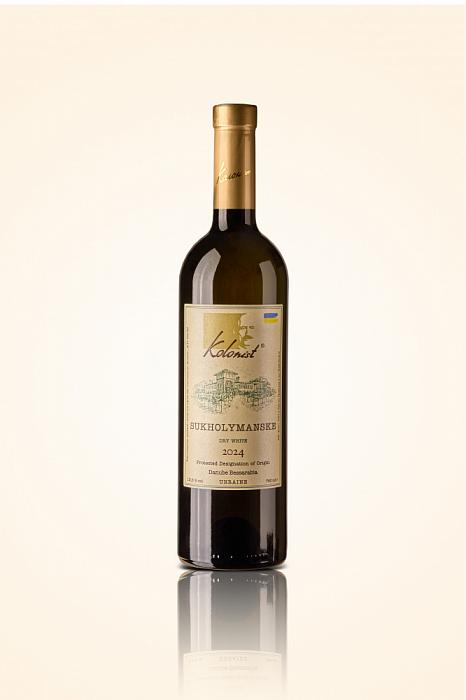
Sukholymanske 2024 (0,75 l) dry table varietal white
Produced from Ukrainian grape variety – Sukholymanskyi bilyi. This grape variety was crossed in the 2nd part of the XX century in Ukraine. A Ukrainian flag on the front label shows that this wine is made from the Ukrainian grape variety.
We are changing the labels into English. During this period, you may receive a bottle with either the previous Ukrainian label or the new English one. Don’t worry, this is the same wine you love.
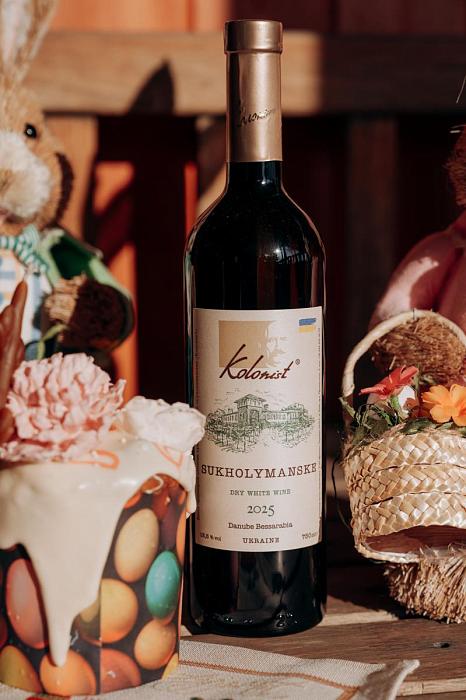
Images on the website are for illustrative purposes only. The purchase includes the bottle of wine only. Any additional items shown are for presentation purposes and are not included.
The vintage year may differ from the one shown in the image.
Please check with a consultant.
The age of the vine: 18 and 21 years
Taste: soft, harmonious, with tones of lime, lychee and nutmeg, with notes of citrus fruits and light acidity in the aftertaste.
Aroma: fruity, with tones of white plum, banana, pear, flowers and light notes of citrus.
The potential of aging in the bottle: 3 years from the vintage year
Serving temperature: from +10 to +12°С
The best form of glass for this wine: “tulip” class Bordeaux (320-405 ml)
The nutritional value in grams per 100 grams: proteins – 0; fats – 0; carbohydrates – 0.2. NO GMO
Energy value: 74,7 kcal / 100g. Alcohol: 12,8 % vol
Circulation: 30000 bottles
Story of this wine
-
The best form of glass
The best form of glass for this wine – tulip class Bordeaux (320-405 ml)
-
ENOGASTRONOMIC COMBINATION
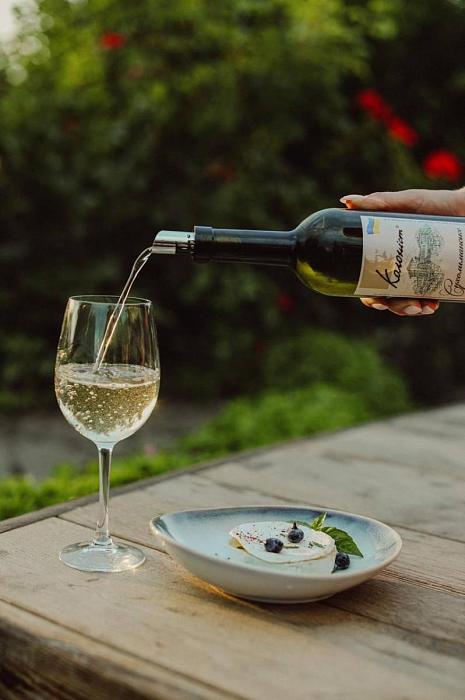
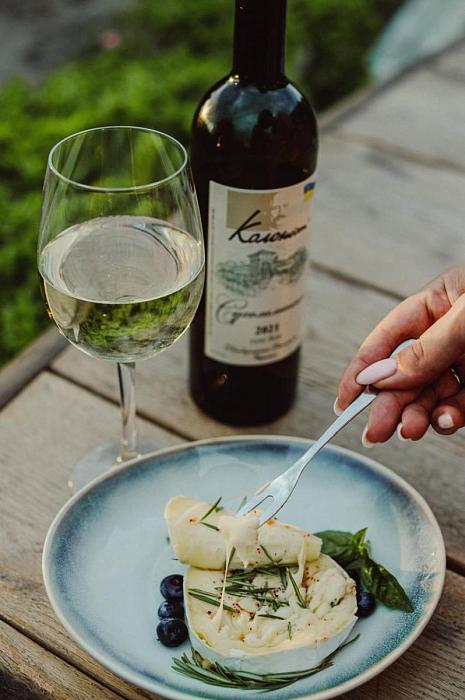
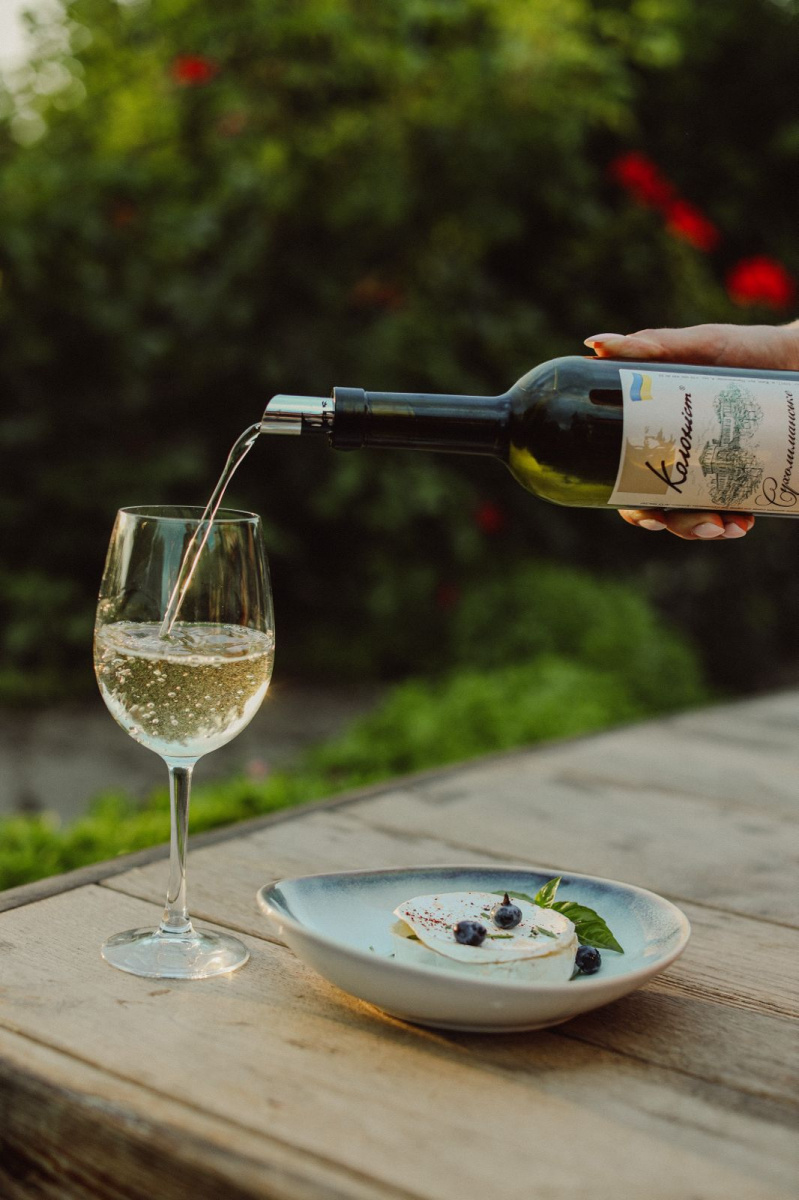
Wine is perfectly combined with light salads and soft cheeses
-
Grape variety
Sukholymanskyi white is an Ukrainian grape variety, which was bred by crossing Chardonnay and Plavay in the middle of the XX century in the NSC "Tairov Institute of Viticulture and Winemaking"
-
Taste
Wine has harmonious and refreshing taste, with light notes of lemon, lychee and quince
Video
Description
Origin and History
Sukholymanskyi White is a true treasure of Ukrainian winemaking — a grape variety that embodies the richness and potential of our land. Its history begins in the mid-20th century, when the National Scientific Center “V. Ye. Tairov Institute of Viticulture and Winemaking” in the Odesa region initiated breeding programs to create grape varieties adapted to local conditions.
In 1949, breeders crossed two renowned varieties — the classic French Chardonnay and the Moldovan Plavai — aiming to combine the elegance of the former with the resilience of the latter. The result was Sukholymanskyi Bilyi, officially registered in 1969.
The variety quickly gained popularity due to its versatility. The main vineyard areas of Sukholymanskyi Bilyi are concentrated in the Odesa region, where climatic conditions are ideal for its cultivation. Today, approximately 3,500 hectares of vineyards in Odesa are planted with this variety, underscoring its importance to the region.
Although it never became as widespread as some other Ukrainian varieties, Sukholymanskyi White serves as the foundation for wines of various styles, distinguished by their quality and expressive character. It is perfectly suited for both single-varietal and blended dry wines, as well as base wines for sparkling production. The grapes feature light golden berries that give wines refreshing flavors with notes of lemon, lychee, and quince, and aromas of melon, pear, white plum, and nutmeg.
Growing Characteristics of Sukholymanskyi Bilyi (White)
Sukholymanskyi White is a grape with character. It ripens within 145–150 days from bud break and requires a sum of active temperatures in the range of 2800–2960 °C. In the climate of Danube Bessarabia, the grapes reach maturity by late September, achieving an ideal balance of sugar and acidity.
The vines are vigorous, with up to 85% shoot maturation, ensuring stable yields of 105–135 centners per hectare. Between 65–75% of shoots are fruitful, producing 1.5–1.8 clusters per shoot.
While the variety requires protection against gray rot, downy mildew, powdery mildew, and phylloxera, it compensates with winter hardiness down to –19°C and an exceptional ability to regenerate — producing up to 45% of its crop from replacement buds even after frost damage. A true fighter of Ukrainian viticulture.
Sukholymanskyi White — The Treasure of Danube Bessarabia
At the Kolonist family winery, Sukholymanskyi Whitethrives in the vineyards of Danube Bessarabia, in the valley of Lake Yalpuh (sometimes Yalpug or Ialpug). Vineyard work is done by hand — from pruning to harvest in mid-September, when the grapes reach peak ripeness.
The proximity of Ukraine’s largest freshwater lake creates a unique microclimate, softening heat and amplifying sunlight through reflection from the water’s surface. The region’s soils — loams with layers of limestone, chalk, and shell rock — provide crisp acidity, while significant day–night temperature variations preserve aromatic freshness.
These natural gifts, combined with the skill of Kolonist’s winemakers, transform Sukholymanskyi White into a fresh, vibrant wine with notes of pear, quince, and a subtle muscat spice.
Sukholymanskyi White at Kolonist — A Revival of Tradition
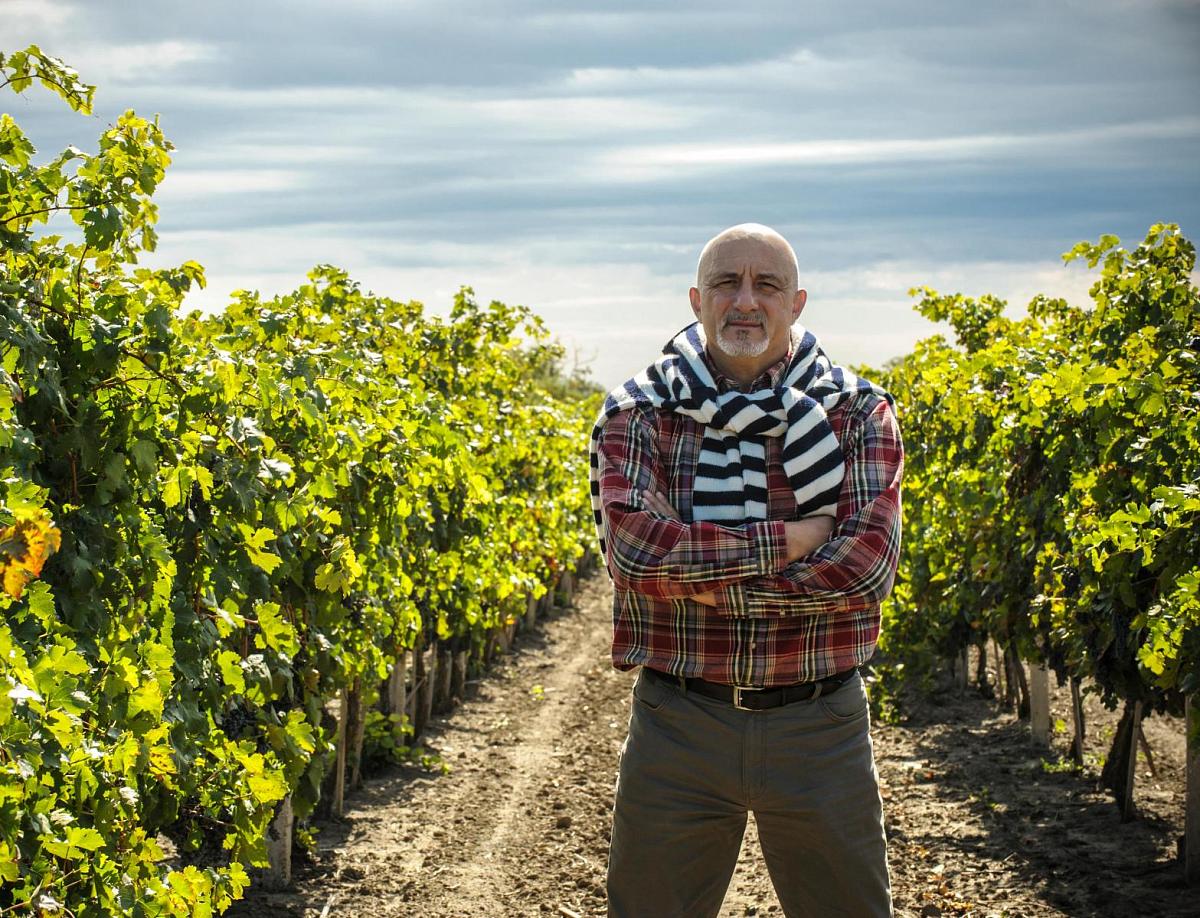
Founded in 2005 by the Plachkov family in the village of Krynychne, Odesa region, Kolonist Winery was the first to restore Sukholymanskyi White (sometimes Sukholimaski or Sukholymansky) to its rightful prominence.
Located in Danube Bessarabia — on the same latitude as Bordeaux and Piedmont — the winery benefits from exceptional natural conditions. Southwestern slopes overlooking Lake Yalpuh and limestone-rich soils form an ideal terroir, lending elegance and minerality to the wines.
From the very beginning, Kolonist set out to build a brand of Ukrainian wine that highlights indigenous grape varieties. Alongside Odesa Black, Sukholymanskyi White became one of the winery’s key grapes.
Founder Ivan Plachkov has often emphasized that working with native varieties is a way to show the world Ukraine’s uniqueness:
“We created a Ukrainian wine brand that did not exist before. Sukholymanskyi White is our pride — a wine that speaks of our land.”
Building the Sukholymanskyi White Brand at Kolonist
Sukholymanskyi White Kolonist is more than a wine — it is a symbol of Ukrainian identity. The label features the Ukrainian flag, emphasizing its origin and deep connection to its homeland.
Kolonist chose this variety to craft a fresh, dry white wine — an ideal companion for light cuisine and warm summer evenings. Grapes are harvested by hand to preserve berry integrity and natural aromas, while strict temperature control throughout vinification ensures freshness and fruit purity.
Sukholymanskyi White — A Ukrainian Star on the French Stage
Sukholymanskyi White Kolonist has won hearts not only in Ukraine, but also abroad — especially in France, the homeland of great wines.
At tastings in Paris and sunny Provence, its crisp freshness and subtle quince notes with a gentle muscat touch have drawn enthusiastic responses. We are proud that French wine lovers call Sukholymanskyi White a “true discovery” — the highest praise from a nation raised on Chardonnay.
Tasting Profile
The wine displays a pale straw color and a harmonious palate with notes of lime, lychee, nutmeg, and quince, complemented by refreshing acidity on the finish.
The aroma is expressive, revealing white plum, banana, pear, floral nuances, and a delicate citrus touch.
How to Enjoy Sukholymanskyi White Kolonist
Perfect as an aperitif, this wine pairs beautifully with light cheeses, salads, seafood, and white fish dishes. Serve chilled to 10–12°C (50–54°F) in small Bordeaux-style tulip-shaped glasses for optimal expression.
The wine has an aging potential of up to 3 years from the vintage, though its freshness is best enjoyed in its early years.
Sukholymanskyi White from the Kolonist family winery is not just a wine — it is a story of love for the land, respect for Ukrainian breeding heritage, and a desire to show the world what Ukraine is capable of.
Uncork a bottle — and discover true Ukrainian character.
Photo Gallery



Share
Other Products
Subscribe to the latest
news and events